Burning
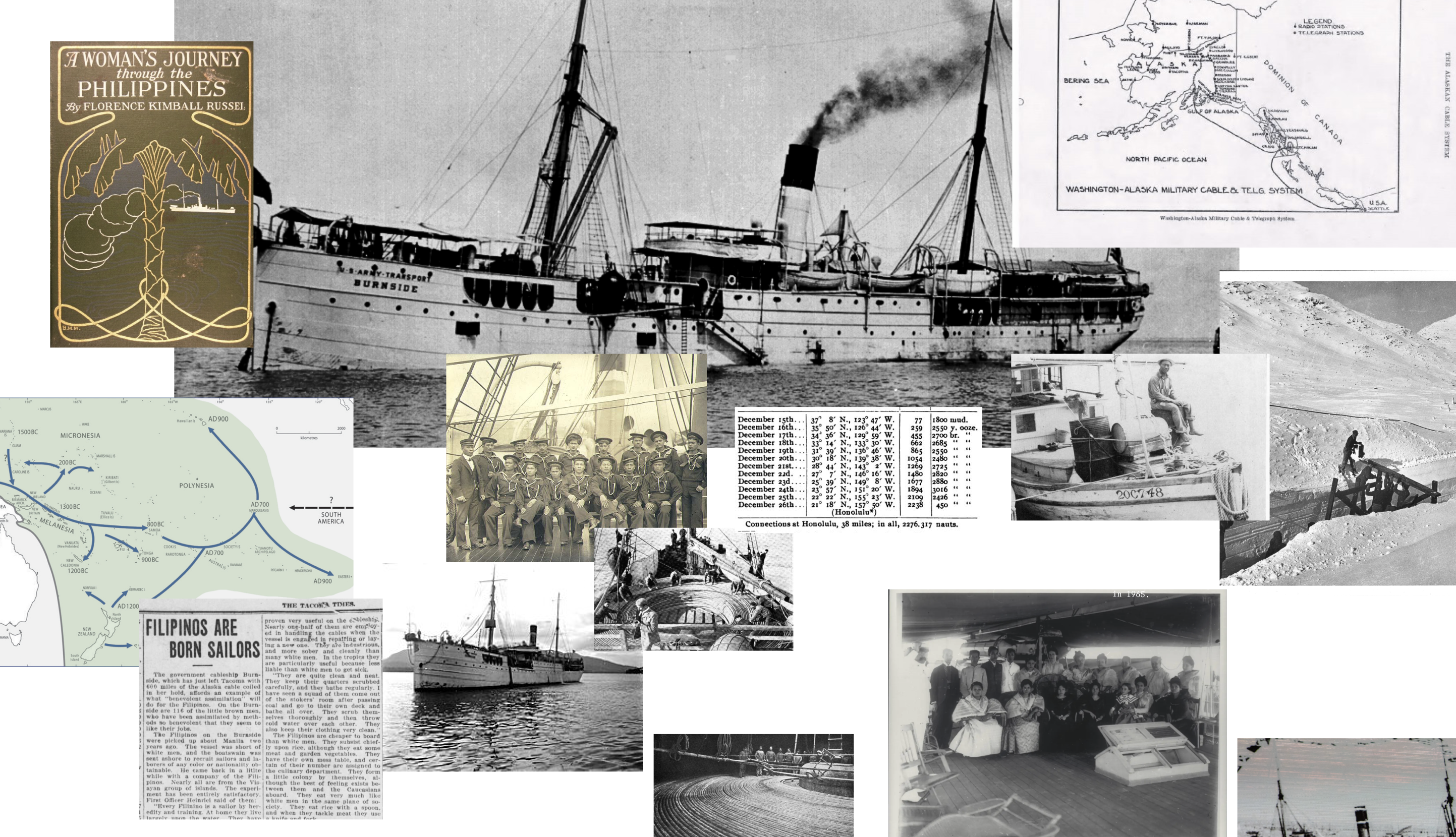

From 1900–1912, the first American cable ship in the Pacific, USAT Burnside, was manned by about 116 Filipino crewmen. They laid thousands of miles of cable across the Pacific, serving American military bases. Burning uses modern networking infrastructure to narrate the voyage and legacy of these seafarers on the desktop.
Philippine seafarers have exerted an often invisible and sunken history in the making of global empire, and continue to maintain vast networks of power in their circulation today.
( In development ) ~20 minutes Executable desktop narrative for MacOS, custom software, downloaded files, etc.
'Burning' is an executable desktop narrative. To experience the piece, you download and launch a piece of software that begins to create & traverse folders, open websites, download files, play audio, send you emails, and more. It uses various internet protocols and networking techniques to trace the legacy of Filipino crewmen who work on cableships, from the 1900s to those who man the Philippine Domestic Submarine Cable Network. The way Burning is told exists beyond desktop cinema: downloading, rearranging, and intervening on the computer, and allowing you to exert your hand and intervene in the telling.
Today, about one in four seafarers globally are Filipino. Many of the first Filipino American migrants came from the workers on this very ship. The Philippines continues to be pivotal to the maritime industry, and Filipino labor and presence among infrastructure concerns—from undersea cables to overseas work—remain prevalent.
In development. Reach out if interested in presenting or supporting: [email protected]
Prototype Screenings
- Burning, Hansabibliothek x ponto, Berlin, Germany, June 24, 2026
Image by Laura Fiorio from the performance of Every Love Song in the World at Transmediale 2026, Berlin, Germany